
You have helped build something remarkable in your own community.
MIDF gives you a trusted way to deepen that local impact and help expand the work of Chabad-Lubavitch everywhere.

Reach every Jew, even in the most remote locations, by opening the way for new Shluchim and communities.

Help start and expand thriving preschools that shape a child’s life and the trajectory of a generation.

Provide a safety net so Shluchim can continue serving when the unexpected happens.

Fund projects that reinforce the eternal bond between the Jewish people and Eretz Yisroel.
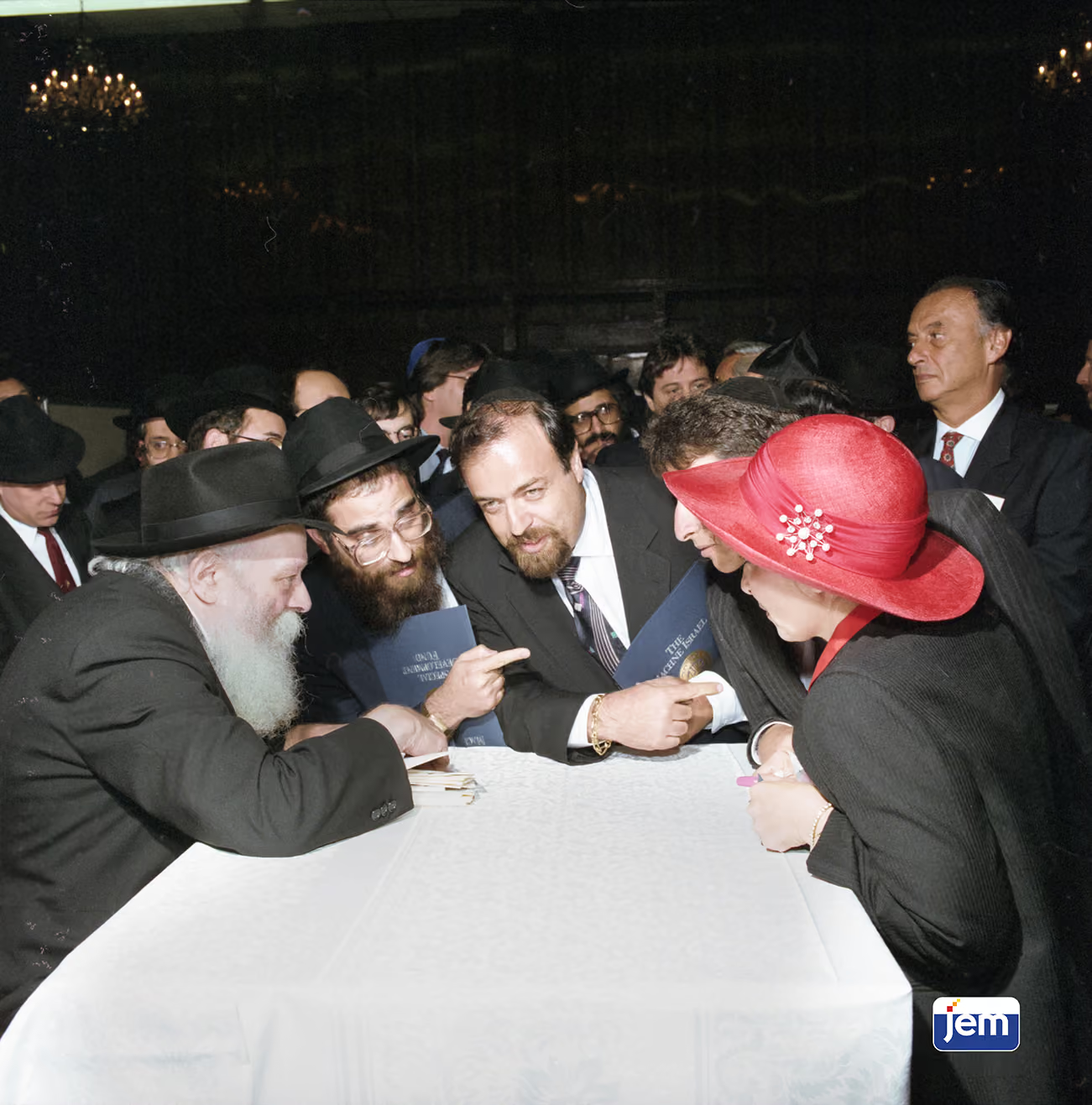
In 5745 (1985), the Lubavitcher Rebbe initiated a central fund to help Chabad Houses grow beyond the limits of local resources. The Rebbe shaped its charter, became its first donor and established a model in which local supporters could become true partners in Chabad’s worldwide mission.
Today, MIDF carries that model forward, enabling donors to deepen the impact of their local partnership and help proven ideas, growing communities and urgent needs across the worldwide Chabad network.
Learn more ABOUT THE FUNDYour MIDF membership account connects the full financial story: what you committed, what has been paid, where funds were allocated and what remains available.